Hamilton
Nit Pickers
Frequently Asked questions
You have questions, we have answers
At Nit Pickers, we understand that dealing with head lice can raise many concerns and questions. Our FAQs section is here to provide clear, concise, and helpful information on the lice lifecycle, identification of infestations, treatments, and prevention. Explore our FAQs to find needed answers and gain peace of mind with our expert guidance.
What are lice? Lice are small, wingless insects that live on human hair and feed on blood from the scalp. Lice infestations are most common among children but can affect people of any age. These pests lay their eggs (nits) close to the hair root. Lice do not transmit diseases, but they can cause itching and discomfort. Regular inspection and proper treatment are essential to manage and prevent lice infestations.
What are Super Lice? Super lice are strains of head lice that have developed resistance to traditional over-the-counter (OTC) lice treatments. These treatments, which often rely on pyrethrins and permethrins, have become less effective as super lice have evolved to withstand these chemicals. 97 percent of head lice strains in Canada have developed resistance to common over-the-counter treatments. As a result, many families find themselves frustrated and battling persistent infestations despite using these common remedies.
How Are Head Lice Spread? Head lice can't jump or fly, but they are excellent climbers. They spread through head to head contact, which allows them to move from one person’s hair to another’s. While lice can be transmitted via shared items like hats, hair ties, scarves, pillows, and other personal belongings, such occurrences are relatively rare. Lice are adapted to survive primarily on humans, and they cannot typically live off a human host for more than 24 hours. Head lice infestations are not related to hygiene or cleanliness; anyone can get lice.
What are the symptoms of a head lice infestation? Head lice are commonly found on the scalp, behind the ears, and near the neckline. Symptoms include itching, often caused by allergic reactions to lice bites, and the sensation of movement in the hair.
What do lice look like? Adult lice are tiny, about the size of a sesame seed, and typically reddish-brown or dark tan in color. Nymphs, or baby lice, are smaller and can appear black, clear, or even red. Lice eggs, known as nits, resemble tiny yellow, tan, or brown dots before hatching. After hatching, the empty eggshell often appears white or clear. Nits are firmly attached to the hair shaft and are notoriously difficult to remove.
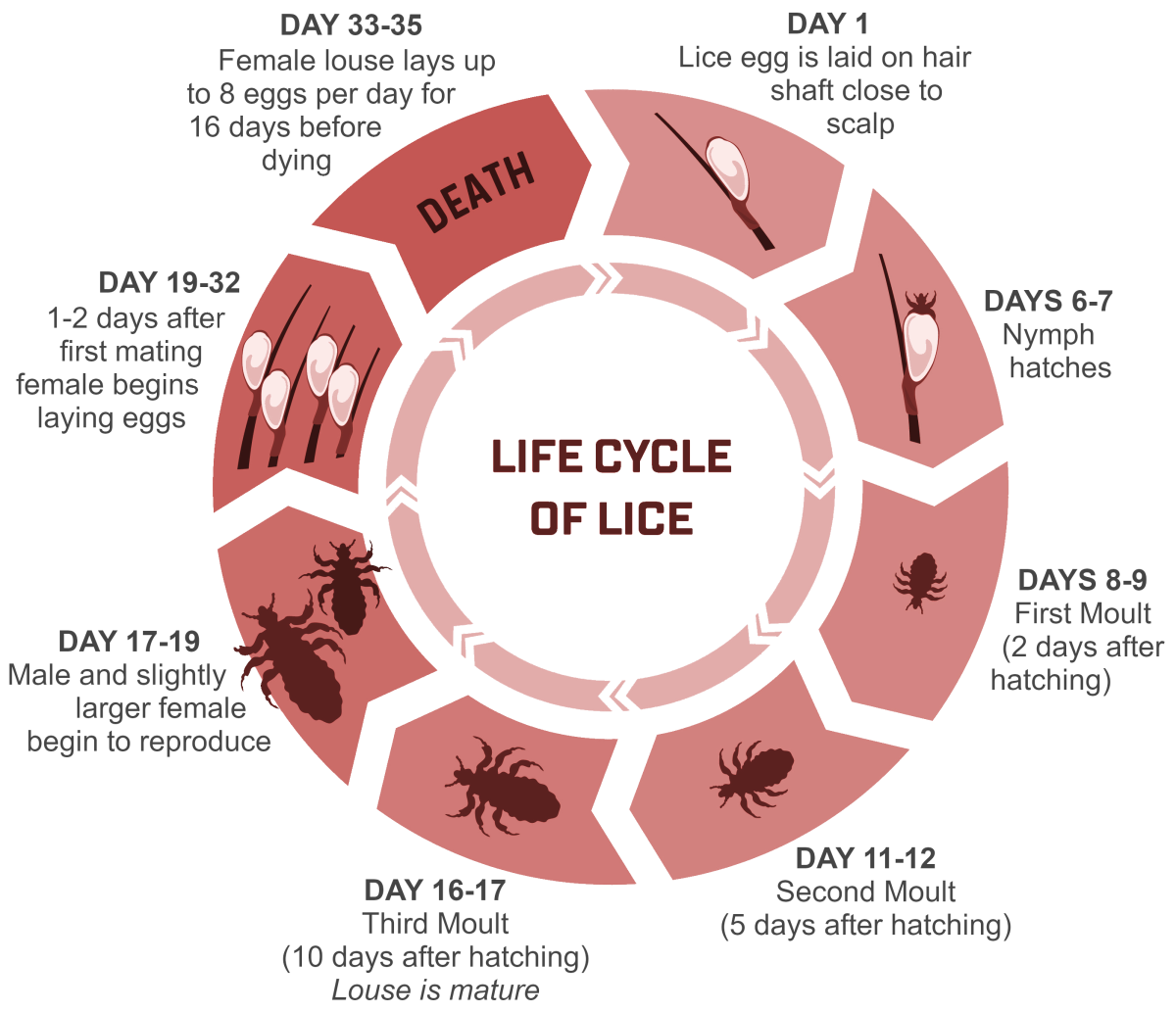
What is the lifecycle of head lice? Nits take six to seven days to hatch into nymphs. Nymphs are immature lice that moult three times over ten days, during the process of maturation. The mature lice mate, and after an additional one to two days, the female louse starts laying her eggs. The adult female only needs to be fertilized once, after which she will lay eggs twice a day, four or five at a time, for the rest of her life. Adult lice live for 16 days, for a total lifespan of about 35 days. Once off the host, for example on pillows or bedding, they generally die within 24 hours. Use this chart to estimate the age of a lice infestation.
How can I prevent the lice from spreading? There are steps you can take to minimize spread.
♦ Avoid head-to-head contact during play, sleepovers, or other activities at home, school, and elsewhere.
♦ Transmission via personal items is uncommon, but it's still best to not share combs, brushes, hats, scarves, coats, hair ribbons, or barrettes with an infested person.
♦ Machine wash and dry clothing, bed linens, and other items used or worn by an infested person within the past two days using a hot water laundry cycle and high heat drying cycle.
♦ Vacuum carpets and furniture, play areas, car seats, and the mattress of the infested person.
♦ Soak hair ties, combs, and brushes in hot water for 10 to 20 minutes, or freeze them in a sealed plastic bag overnight.
♦ Avoid using pesticide sprays in your home as they can expose your household to unnecessary and harmful chemicals.
Does everyone in my household need to be treated for lice? All family members must follow precautionary steps to eliminate head lice, even if no lice are initially detected. Head lice can spread quickly among close contacts, so conducting thorough checks and taking preventive measures can help prevent further infestations. Use non-toxic treatments like reduction combing with lubricant as a precautionary measure to ensure any undetected lice or eggs are effectively removed. By being proactive and thorough, the risk of recurrent infestations is minimized.
Can pets get head lice? No, head lice are species-specific, meaning they only live and thrive on human heads. Pets like dogs and cats have their own types of lice, which are entirely different from the ones that affect humans. There's no need to worry about our furry friends - they won't catch or spread human head lice.
Nit Pickers ~ Expert Lice Removal with a Gentle Touch
